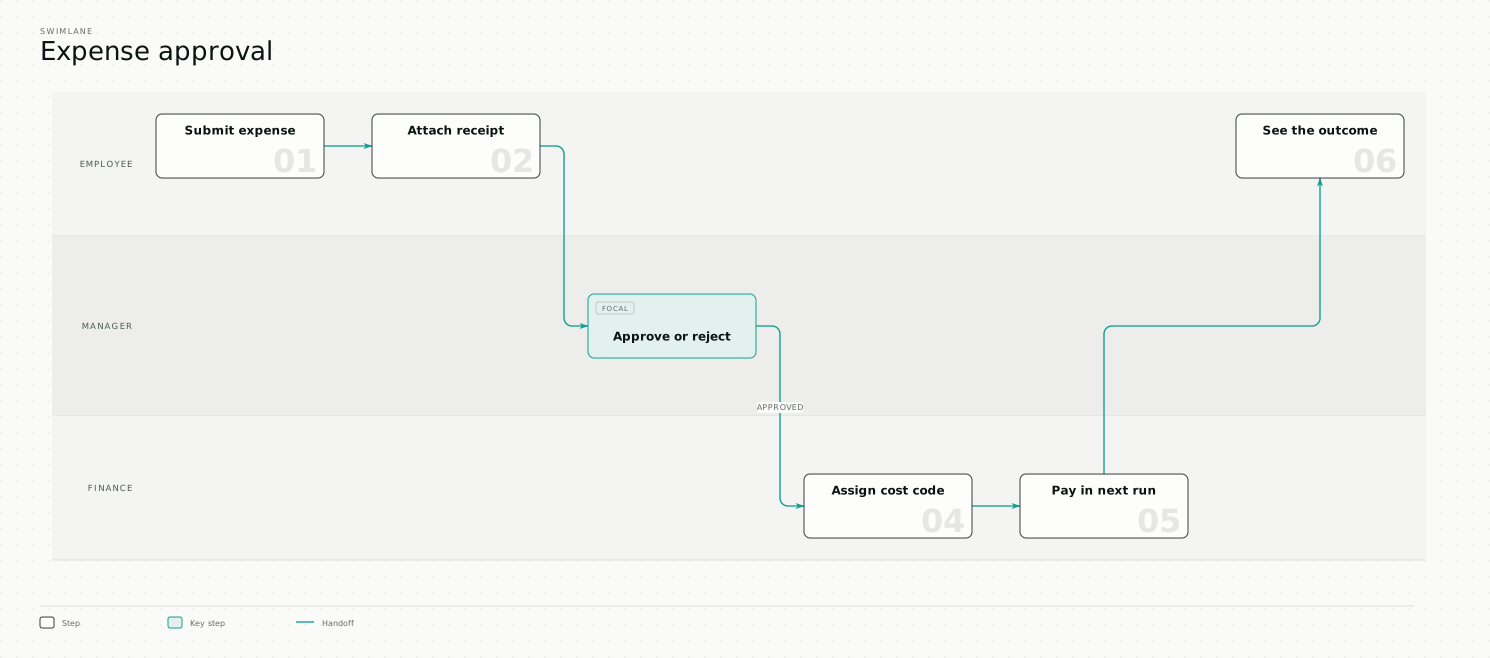
A flowchart answers what happens next. A swimlane diagram answers who does it — and once a process crosses more than one team, that is almost always the more useful question.
What it is
A swimlane diagram is a flowchart split into bands. Each band is one party — a person, a team, a system — and every step sits in the band of whoever performs it. The arrows between bands are handoffs.
That single constraint is what makes the diagram worth drawing. As soon as each step must belong to somebody, two things become visible that a flowchart hides:
- Every handoff. A crossing line is work changing hands, which is where processes lose days.
- Every idle lane. A party with one box in the middle is often an approval nobody has questioned in three years.
When to use one instead of a flowchart
Use a swimlane when the answer to "who is responsible for this step" is interesting. Use a plain flowchart when it is not.
Concretely: a swimlane earns its complexity when the process crosses two or more parties. For a single team the lanes are noise — a dimension carrying no information.
Choosing the lanes
This is the whole design decision, and it is usually made carelessly.
Lane by role, not by person. "Approver" survives someone leaving; "Sarah" does not.
Three to five lanes. Two is a flowchart with extra lines. Beyond five, the handoff arrows cross so often the diagram stops being readable — and if you genuinely have eight parties, that finding is the result, and it deserves a sentence rather than a drawing.
Systems count as parties. If a step is performed by a billing system with no human involved, give it a lane. Folding a system into the finance team hides an integration.
Order lanes by first contact. Whoever starts the process goes first. Lanes ordered arbitrarily make the arrows zigzag for no reason.
A worked example
The expense approval at the top of this page has three lanes and five handoffs. Read it and notice what the shape tells you:
- The employee appears at both ends. Most approval processes are round trips, and a diagram that stops at "paid" is missing the step where the person finds out.
- Finance has two consecutive steps in one lane. That is fine — consecutive steps inside a lane are cheap. It is the crossings that cost time.
- One box is emphasised, and it is the only step that can stop the process. Exactly one step in an approval flow can reject, and it should be obvious which.
The usual failure
The most common broken swimlane is one where the lanes were chosen after the boxes. Someone draws the process as a flowchart, then draws bands around it, and the result is a flowchart with decorative stripes: steps land in a lane because of where they already were, not because of who does them.
Draw the lanes first. Then every step has to be placed by asking who performs it, which is the question the diagram exists to answer.
From a file you already have
If the process is already drawn in Visio, draw.io or Lucidchart, you can put it on your brand without redrawing it. Drop it into the converter: the lanes, grouping and reading order survive, repainted in your own colours and type, and it exports as editable PowerPoint rather than a picture of a diagram you cannot fix a typo in.